
Your Mind Is Not Always on Your Side
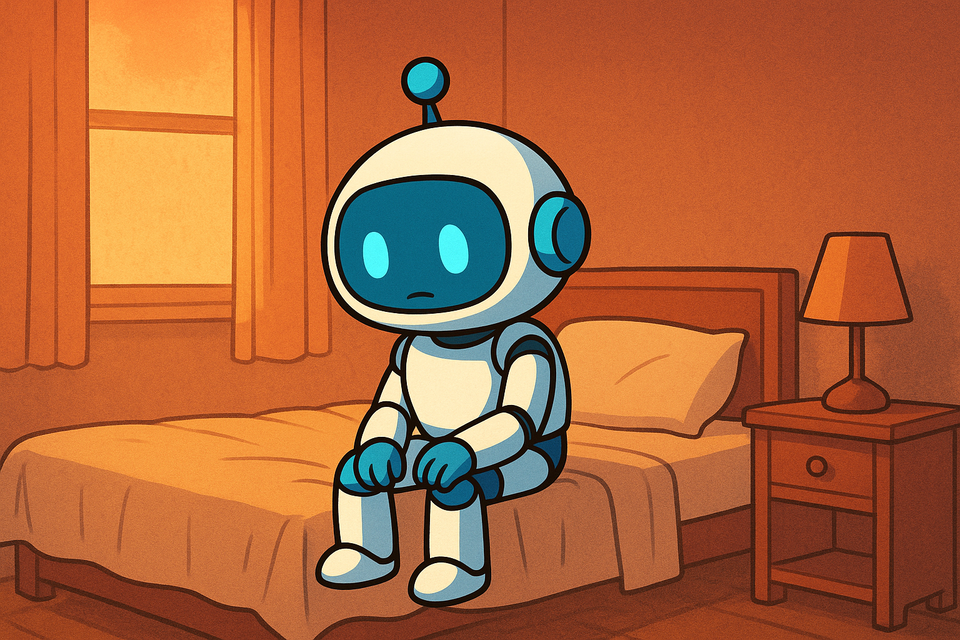
Some mornings, your worst critic is already waiting. You haven’t even touched the floor, and there it is—sitting on the edge of your bed, whispering with a voice made of sandpaper:
You’re not good enough.
You’re falling behind.
You don’t matter.
That voice doesn’t check facts. It doesn’t cross-reference with your calendar, your friends, or your past efforts. It just declares, confidently, what you fear the most.
Sometimes, it’s doubt in disguise—a misguided attempt to protect you. A primitive system firing warnings to keep you from risk, rejection, or putting yourself out there. It wants you quiet. Invisible. Safe.
But sometimes, it’s not just that. Sometimes, it’s heavier. Sometimes, it’s depression. And while I am not here to diagnose, I am here to say: if that voice feels constant, if it pulls you inward and away from everything that once mattered, it’s worth paying attention. You’re not overreacting. You’re not weak. And you don’t have to carry it alone.
Talk to others.
Not because it magically solves everything—but because silence keeps the story one-dimensional. Speaking up introduces nuance. It opens windows. It doesn’t erase the struggle, but it changes the lighting.
You don’t have to know what to say. You don’t need the right words. You just need to stop being the only one in the conversation.
You’re allowed to feel what you feel. And you’re allowed to let others stand beside you in it.
Some days, just getting through is enough. And even on those days, even when it all feels fragile, you’re not broken.
You’re still here. And that’s already something brave.