
Your Criticism Isn’t Feedback
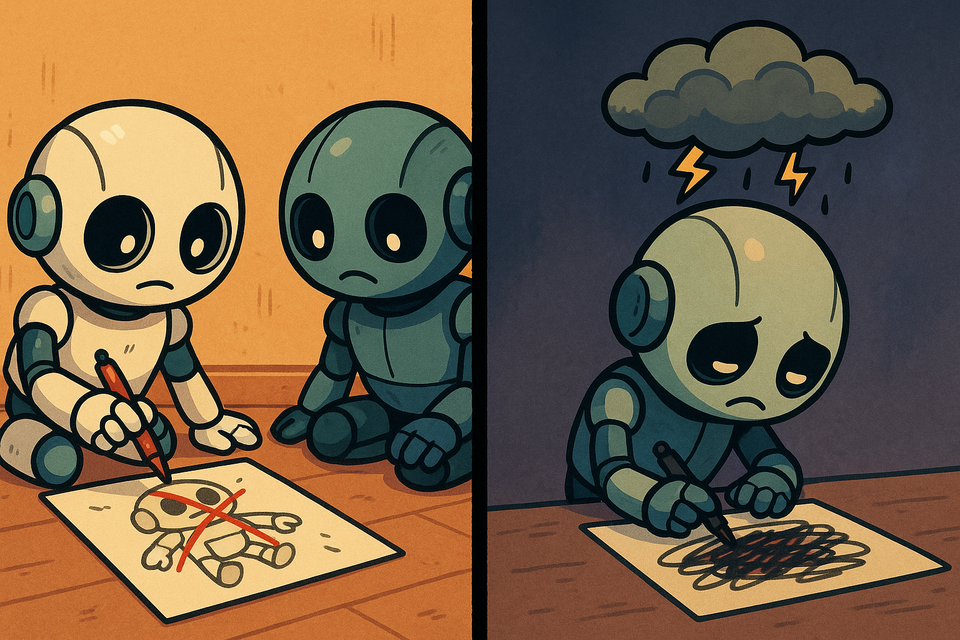
You’re not helping when all you do is point out what could be better.
Yes, things can improve. Ideas can sharpen. Execution can elevate. But if your only contribution is spotting the flaw, you’re not part of the work—you’re just standing on the sidelines, heckling.
Criticism is easy
Improvement is hard. And there’s no prize for being the smartest person in the room if all you do is remind everyone what’s missing.
Worse: constant criticism doesn’t just undermine the work—it devalues the people doing it. You tell them, over and over again, “This isn’t enough. You aren’t enough.” And eventually, they stop listening. Or worse, they stop caring.
And that applies just as much when the voice is your own.
Your inner critic loves perfection but hates progress. It’s the one that takes a finished task and still calls it a draft. The one that says you should have done more, tried harder, been better. As if enough is a crime.
If you don’t love yourself
But if you don’t value your own work until it’s flawless, you won’t value yourself either. You become the person who finishes the race but refuses to celebrate because the time wasn’t a personal best. That’s not ambition—that’s erasure.
You don’t build confidence by cutting yourself down. You build it by saying, “This is good.” Not perfect. But worthy.
Sometimes, the most radical act—towards others and yourself—is not pushing for better. It’s recognising what already is, not as the end, but as a real, tangible milestone.
You’re not more valuable when you find flaws. You’re valuable when you find worth.